Gardens in Glass
Cooped up and bored? Terrariums are a fun project for the whole family.
Planting a terrarium is a creative way to keep a gardener’s hands busy—and dirty—while waiting for spring. This is a fun project, easy to do with the kids at home and a great teaching tool. Lots of lessons can be learned from creating a mini-ecosystem in a jar.
There are two types of terrariums: open and closed. The plants you choose will decide which system is best for you. Tropical plants that thrive in shady, humid conditions are perfect for a traditional, closed terrarium; plants such as succulents and cacti that need dry conditions and bright sunshine have to be grown in an open terrarium or dish garden.
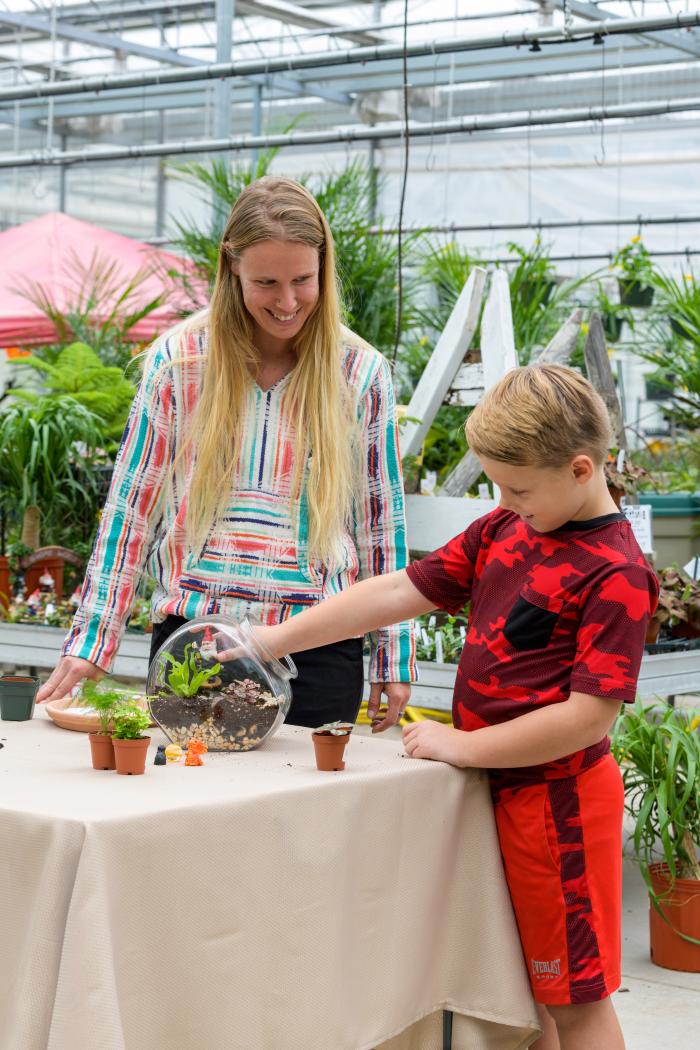
Nichole Keyes, of Lake Street Garden Center in Salem, tells us how to make a closed terrarium.
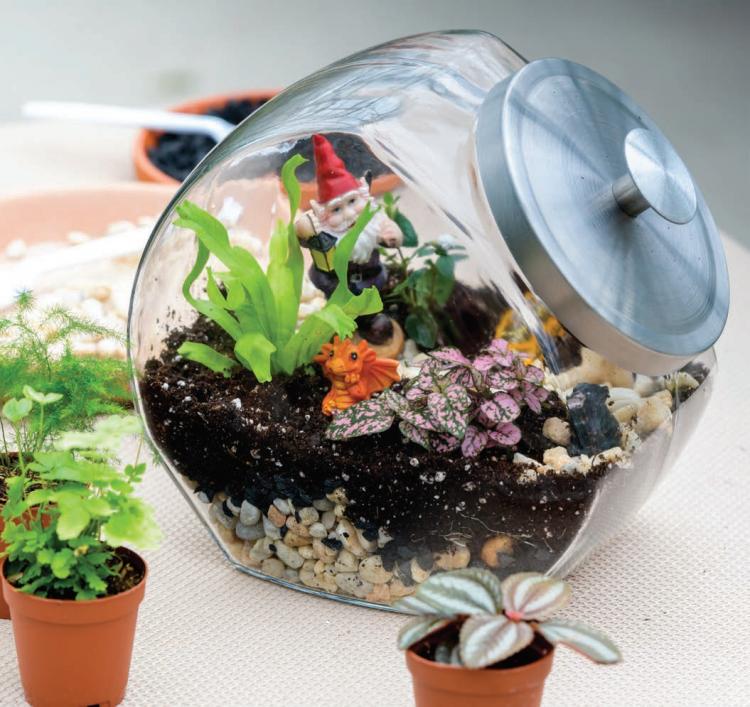
“The first thing to consider is your container,” she says. “Clear glass is best for viewing.” If you don’t have a large glass jar, an old fish bowl or a cookie jar, she advises scouring the secondhand shops. “It needn’t be expensive,” she says. “The size of the container you choose determines how many plants you can use, and a wide-mouth container is easier to work with than one with a narrow opening.”
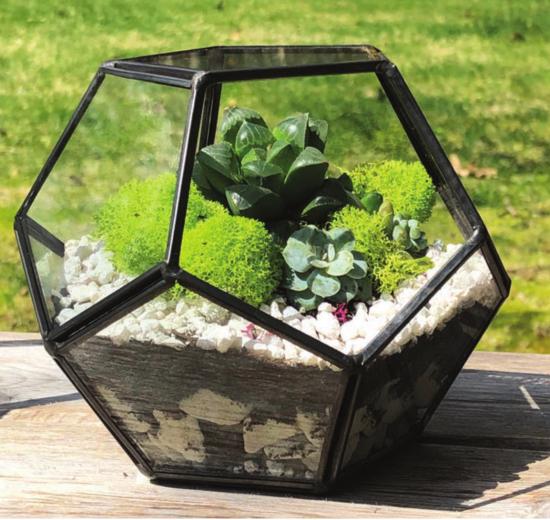
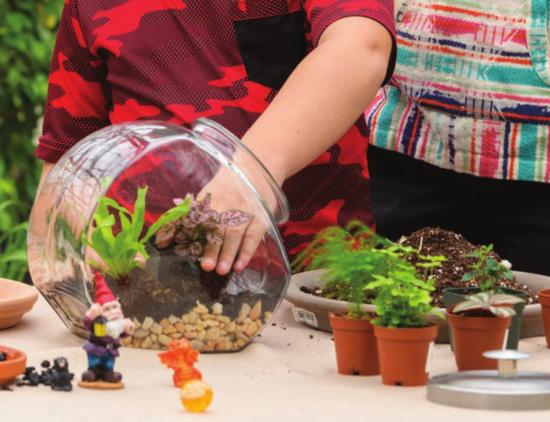
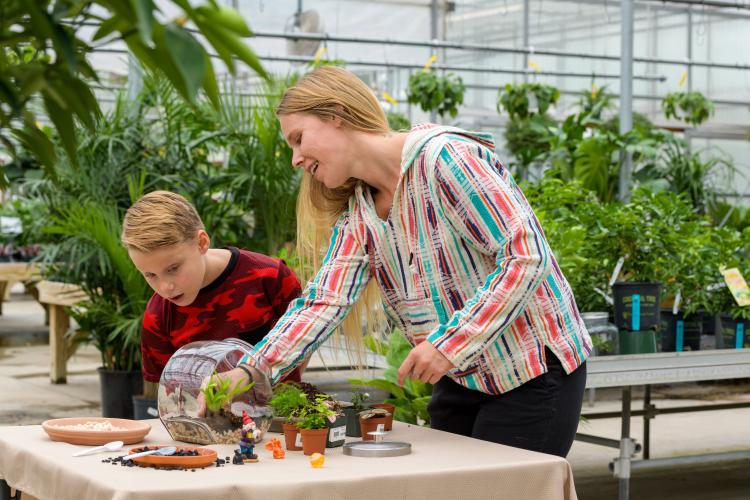
Left: Along with her son, Nichole Keyes, of Lake Street Garden Center in Salem, demonstrates how to assemble a terrarium with a fish bowl, various plants and whimsical objects. Above: Containers are available in many styles.
After choosing the container, you will need pea stone, activated or horticultural charcoal, and a good-quality potting soil. “Cover the bottom of your container with about a 1-inch layer of stones to provide drainage,” Keyes says. You can also use glass beads, aquarium gravel or decorative pebbles.
In addition to a container, you’ll need pea stone, activated or horticultural charcoal, and potting soil. For plants, choose ones with the same growing conditions. Top right: Lake Street Garden Center’s miniature garden supplies
Then, “Sprinkle enough charcoal over the stones to cover the rocks. This acts as a purifier, prevents mustiness and mold, and keeps the air in the container clean,” she says.
Next comes soil. Keyes advises using potting soil that contains perlite, and is light and fluffy to provide the plant roots with good air exchange. Fill the container to about one-third to halfway full with the soil—the exact amount depends on the size of the plants you are planting. “A 10-inch glass bowl holds between two and four plants,” Keyes says, “or fewer if you want to leave space for paths and decorations.”
Now it is time for the plants. Choose ones with the same growing conditions for light, water and humidity. (Check out the sidebar for Keyes’ recommendations.) Remove them from their pots and lay out your design first. “Decide if you are going to view the terrarium from all sides or just from one side,” Keyes says. “For a central view, place the low-growing creepers in front and a taller plant in the back or off to one side, like a tree. Medium growers can go in the middle. I like to create an upward slope.”
For a 360-degree view, place the taller plants in the middle and turn the container as you plant to see the terrarium from all sides as its formed.

When you get a look you like, go ahead and plant. Here’s where the little hands of your helpers come in handy! You may need some longhandled tools—such as an iced-tea spoon, tongs or a chopstick—to aid in the planting if there isn’t enough room to work. Dig shallow holes, and be sure to get all the roots buried in soil. Gently tamp down the surface to secure the plants, and water lightly to settle them in. “Be cautious; too much water makes it boggy, and you can’t go back and remove it,” Keyes says. “It is easier to control the amount of water by using a spray bottle.” An unused turkey baster can also be used to direct water where it is needed.
“Once your plants are in place, it is time for you to get creative and decorate your terrarium however you like,” Keyes says. “Place it where it will get indirect light—like in a north-facing window or set back from a brighter window.” The terrarium should not sit in direct sunlight or the plants could cook! Turn your terrarium regularly to make sure all the plants get some light and grow evenly. Eventually, happy plants will start to outgrow their space. “You will also need to manicure your plants occasionally to keep them down to size,” Keyes says.
With the top closed, your little rainforest ecosystem won’t need frequent watering as it recycles water and nutrients. Check the soil for moisture every two weeks or so. The soil color will lighten as it dries. “The closed top causes condensation to form,” Keyes says. “If this is making your terrarium too wet, you can wipe the inside of the glass with a paper towel to remove some of the excess moisture.” You can also leave the top open for a bit to let some of the water evaporate.
A few common mistakes are adding too much water initially, overcrowding the plants, and mixing plants that don’t share the same needs for light, humidity and water. Most garden centers have terrarium-making supplies and appropriate plants, as well as already-planted terrariums. Some, like Lake Street Garden Center, have hosted terrarium-building workshops.
Many garden centers, including Lake Street Garden Center, have terrarium-making supplies and appropriate plants.
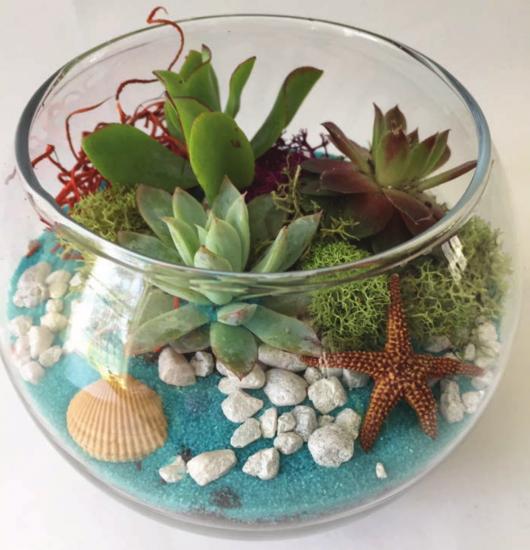
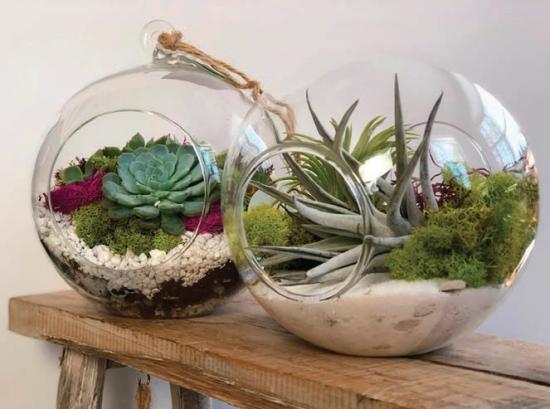
If you’re looking instead for an open terrarium or dish garden, perfect for desert plants—such as cacti and succulents—Cindy Mauchi, of Love Green Terrariums in Lee, offers some beautiful examples. “When we started, we also had tropical-plant terrariums, but currently, we only make succulent and air plant terrariums,” she says. “Open terrariums are ideal for succulents, letting the soil dry quickly— which is perfect for succulents to breathe and grow,” Mauchi says. “They don’t require a moist environment, which is what closed terrariums do.”
Once the top is closed, the terrarium won’t need much watering as it recycles water and nutrients.
Mauchi offers the following suggestions for an open terrarium:
• Use a container or dish that is at least 4 inches deep.
• Make a base of pea stone with a covering of charcoal for drainage as you would with a closed terrarium.
• Cover the base with a fast-draining potting mix made for cacti and succulents.
• Choose plants that have the same requirements for light, soil and water.
• Replicate the same depth the plants were growing at in their pots.
• Wear gloves if the plants are thorny!
• Cover the soil with small, colored rocks for added eye-appeal, if you wish.
• Place your dish garden in bright sunlight if that is what your choice of plants needs.
• After an initial watering to settle the plants in their new home, wait to water until the soil is dry at a depth of at least 1 inch. Mauchi points to a few advantages of open terrariums: better airflow for plants, no condensation issues, lower risk of mold and rot, and ease of care. She sells kits and planted terrariums on her website and at the Manchester Craft Market in the Mall of New Hampshire. NHH
For a more elegant look, delicate glass balls can rest on tabletops or be suspended.
Good Plants for Starting a Terrarium
Nichole Keyes, of Lake Street Garden Center in Salem, recommends these low-light, indoor-foliage plants for your tropical terrarium:
• Polka Dot Plant (Hypoestes phyllostachya)
• Baby’s Tears (Soleirolia soleirolii)
• Pilea
• Peperomia
• Assorted small ferns
If you want blossoming plants, these three are her favorites:
• Serissa, which has white star-like flowers
• African Gardenia (Mitriostigma axillare), which has a fragrant white blossom
• Lace Flower (Episcia dianthiflora), which has fringed, white, trumpetshaped blossoms.
For something different, try a terrarium of carnivorous plants. Keyes recommends Venus flytrap, pitcher plant and sundew. Leave the top off their container to watch them dine on insects.
RESOURCES
Lake Street Garden Center • (603) 893-5858
lakestreet.com
Love Green Terrariums • lgterrariums.com
Manchester Craft Market • manchestercraftmarket.com